Projects
DI Water Conductivity Sensor Development
Show More
Description:
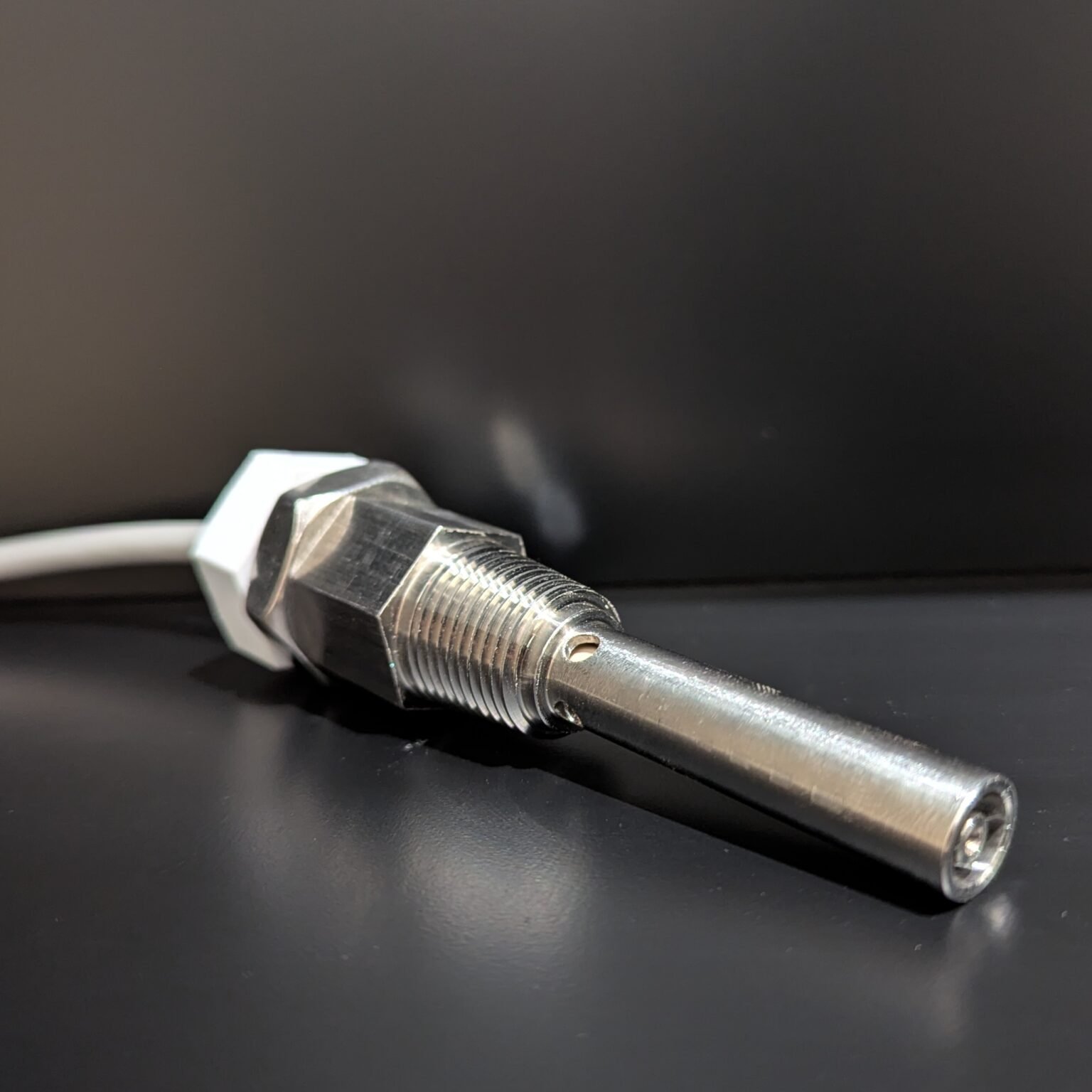
A high-precision DI water conductivity sensor was developed for an industrial client requiring reliable water quality monitoring in purity-critical applications such as hydrogen production and process control. The system was engineered as a complete solution — combining mechanical design, precision electronics, and integrated microcontroller (MC) software for signal processing and communication.
Key Work:
- Designed a custom probe and electronic interface for ultra-low conductivity measurement (down to 0.04 µS/cm)
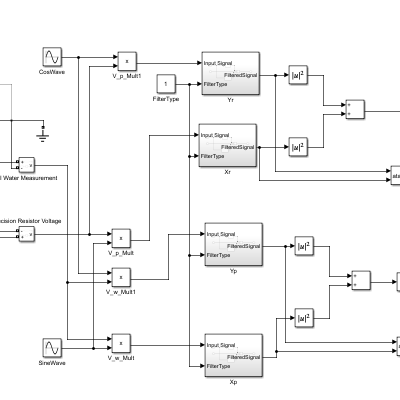
- Implemented an conductivity measurement algorithm, developed and verified through MATLAB Simulink modeling
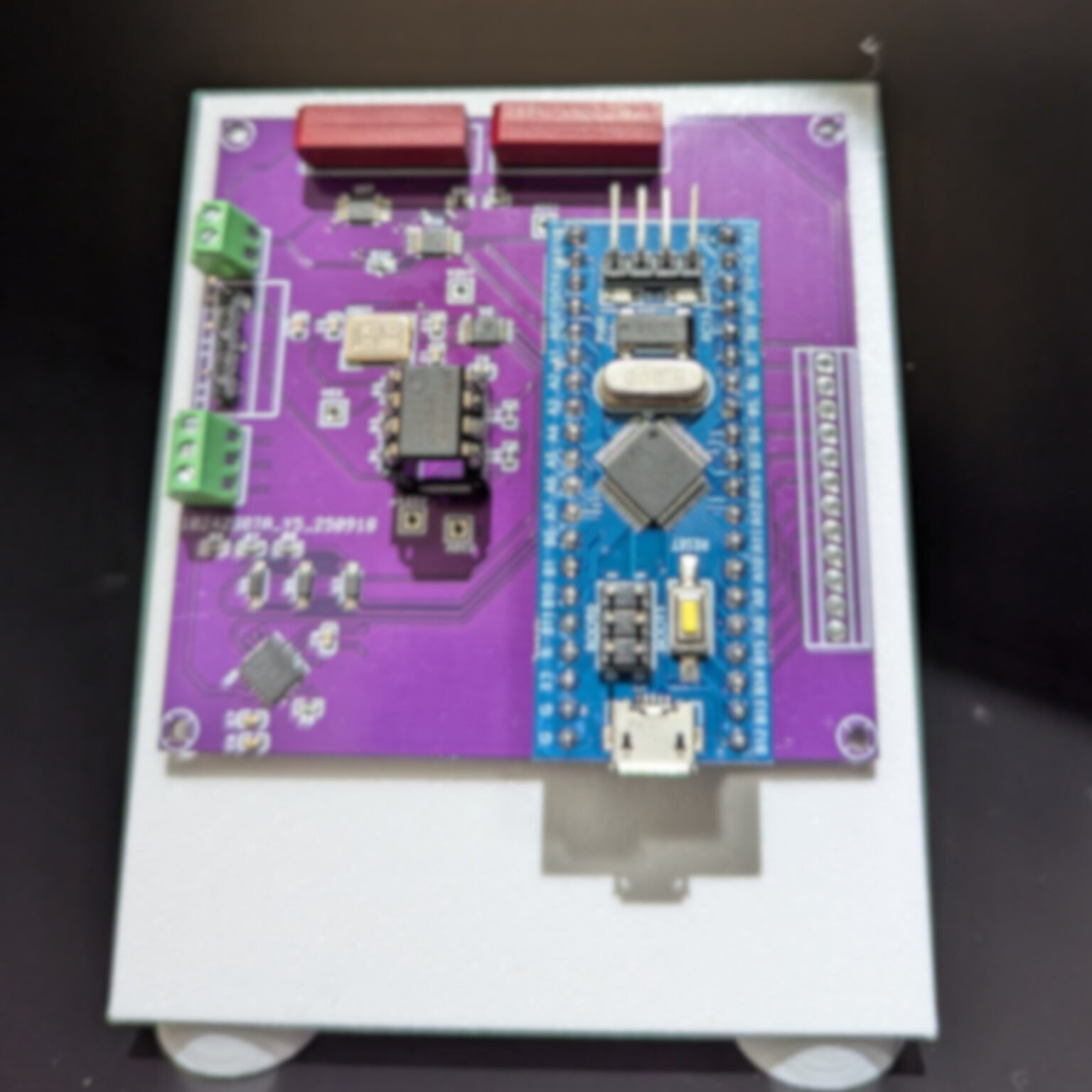
- Integrated a PT100 temperature element within the conductivity probe, with dedicated signal-conditioning electronics on the PCB
- Developed STM32-based firmware for excitation control, signal acquisition, temperature compensation, and data communication
- Used the Simulink model to support component selection, performance analysis, and troubleshooting
- Provided modular interface options (Modbus and 4–20 mA) for flexible system integration
- Performed calibration and verification
Technologies Used:
STM32 · STM32CubeIDE · MATLAB Simulink · Fusion 360 · EasyEDA · PT100 temperature sensing · Modbus / 4–20 mA communication
Impact:
The project demonstrated Borzhu’s capability to deliver full-stack, firmware-integrated instrumentation — from algorithm design and simulation to PCB, firmware, and mechanical integration. The resulting system achieves precise, stable conductivity measurement at ultra-low ranges, enabling cost-effective water quality control for purity-critical industrial applications.
Custom Electrolysis Stack for Solar Module Integration

Show More
Description:
A custom-built electrolysis stack was designed and built for direct operation from a solar module, enabling efficient green hydrogen production with minimal electronics, high resilience, and cost-effectiveness.
Key Work:
- Custom electrolysis cell architecture designed from scratch
- Selected and sourced materials for electrodes, membranes, and housing
- Current-voltage behavior modeled to match solar panel characteristics
- Integrated the system for optimized efficiency without complex power electronics.
- Real-world testing under varying sunlight conditions
Technologies Used:
SolidWorks · Electrochemistry modeling · Embedded system prototyping · Materials selection
Impact:
The system demonstrated low-cost, direct solar-powered hydrogen production—eliminating the need for DC/DC converters or battery buffering. This provides a simple, standalone solution for green energy applications.
Precision Smart Rotator with IoT Control Prototype

Show More
Description:
An IoT-enabled stepper motor system was engineered for high-precision remote control, featuring real-time adjustments via smartphone and automated motion sequencing.
Key Features:
- Smartphone Dashboard
- Live RPM/direction control via sliders
- Angle targeting with position feedback
- Programmable Automation
- Preconfigured motion profiles (acceleration, steps, dwell time)
- Camera trigger synchronization
- Compact Mechanical Design
- Custom 3D-printed housing (Fusion 360)
- Integrated electronics compartment
Technologies Used:
Circuit design · Fusion 360 · IoT protocols (MQTT)